October 8, 2026

Demand for Artificial Intelligence is on the rise, boosted by declining costs and the technology’s increasing capability to work on its own. That means increased appetite for compute and the physical infrastructure powering AI. Anthropic’s latest Sonnet model, for example, costs up to 30% less per task, according to the company, while OpenAI’s recently introduced “dots”—always-on agents that can work toward users’ goals around the clock1—could increase the need for compute dramatically.
Lower costs can unlock more AI activity. Competition from lower-priced open-weight models is putting pressure on token prices—the fees developers pay for the text that AI models process and generate. As we discuss in Investing for the Compute Bottleneck, cheaper intelligence can make more applications and automated workflows economically viable.
Agents could amplify this demand. A chatbot answers a question; an agent works through multiple steps toward a goal. Preparing for a client meeting could involve reviewing notes, analyzing portfolio changes, and drafting an agenda. These workflows can consume 5–50x as many tokens as a chatbot interaction, depending on the task. Always-on agents could extend this processing beyond individual conversations.
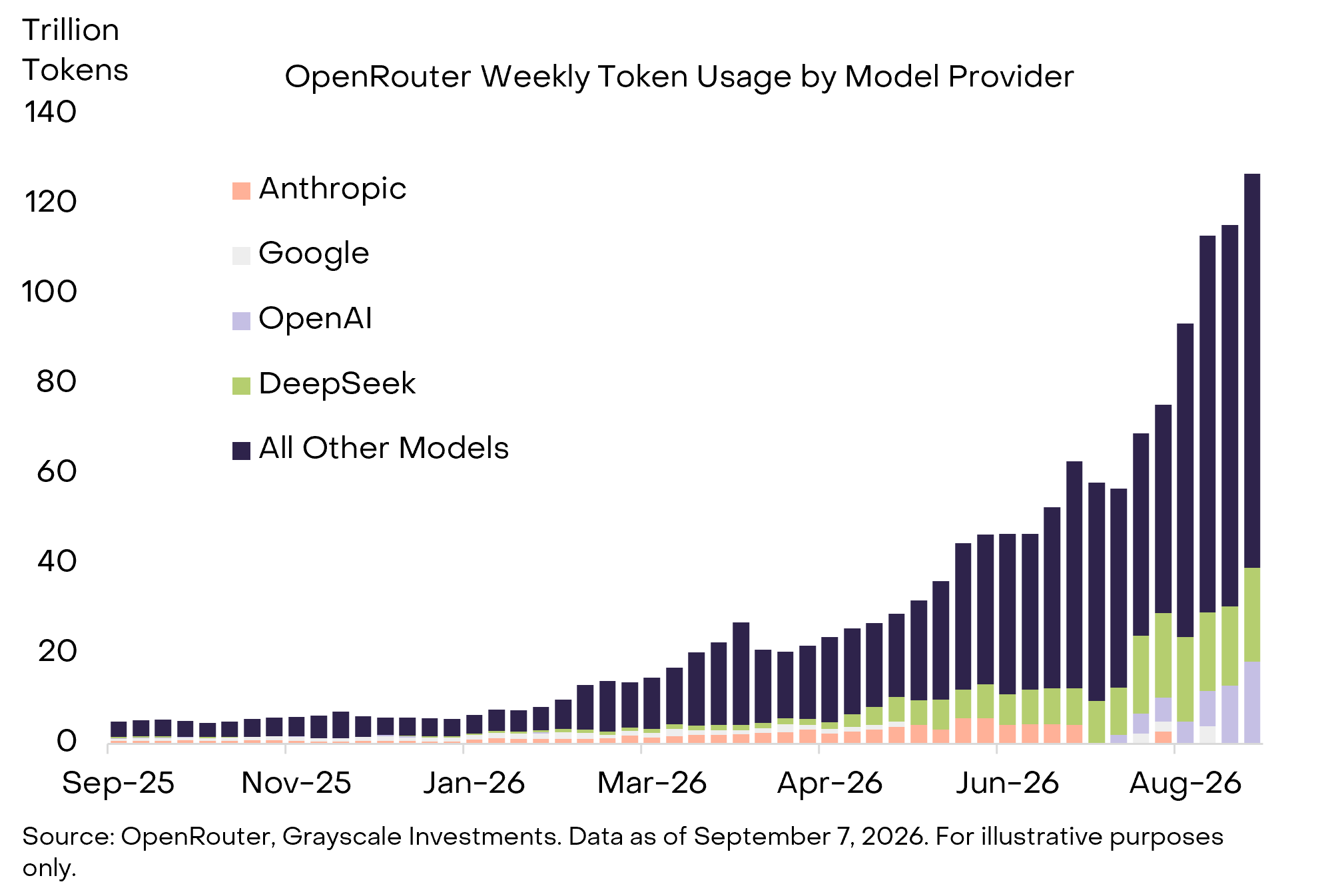
Inference—the computation required to run AI models—is already growing rapidly (Exhibit 1). Goldman Sachs projects that token consumption could increase 24x by 2030, driven largely by agents. Even as AI becomes more efficient, total compute demand can rise if usage expands faster.
That digital activity still depends on physical infrastructure. Power, data centers, and GPUs take time to deliver. Cheaper AI can therefore coexist with tight compute supply: CoreWeave recently reported signing new contracts at higher compute prices. In our view, cheaper intelligence and more capable agents could expand AI use cases and usage enough to outweigh efficiency gains—supporting demand for scarce compute capacity and benefiting its owners.
Key Takeaway: Cheaper AI and more capable agents will likely accelerate compute demand, benefiting owners of the scarce physical infrastructure supporting the expansion of artificial intelligence.
Exhibit 1: From chatbots to agents, inference demand is surging