November 19, 2026


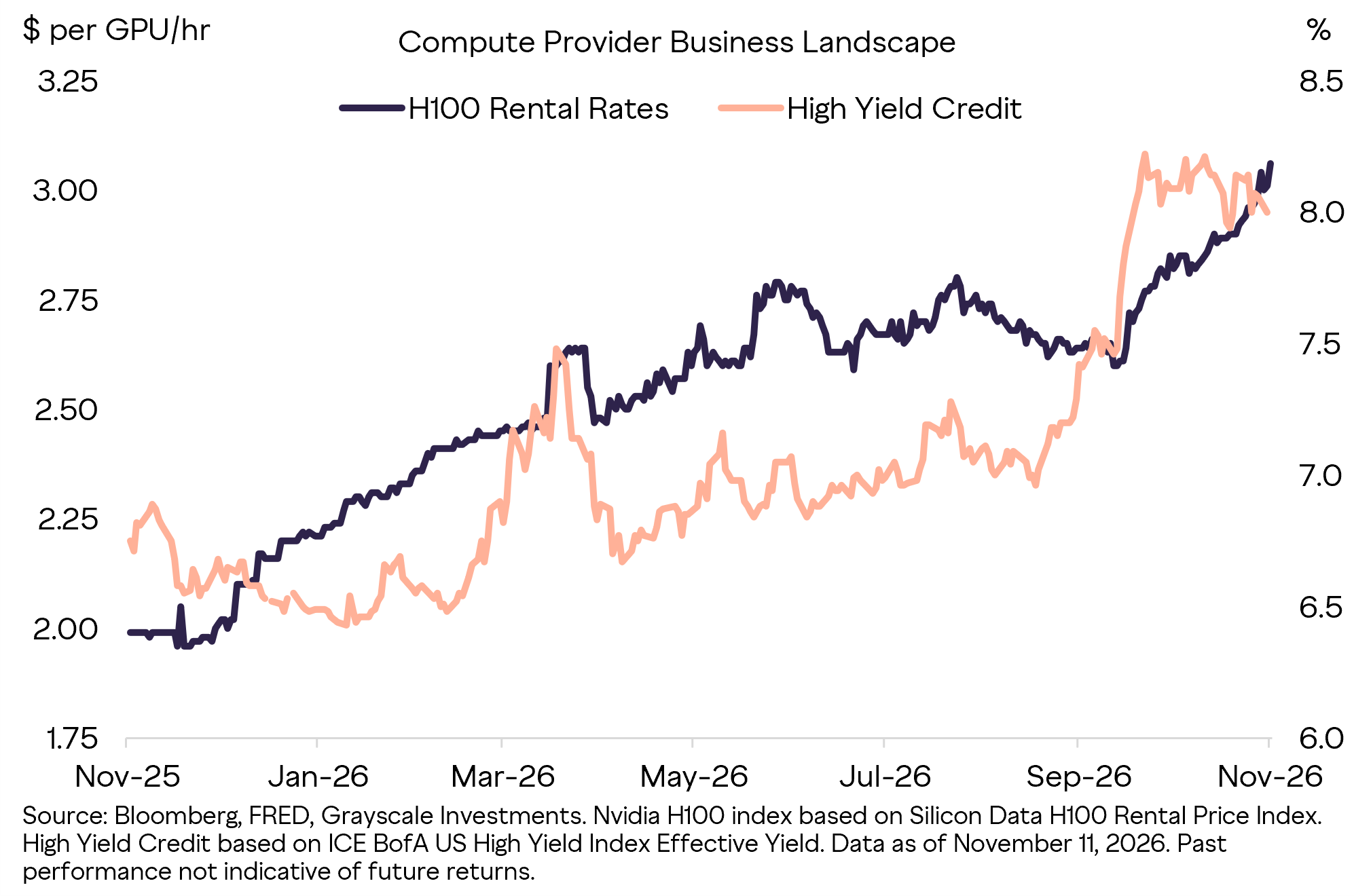
Rising compute demand is allowing AI cloud providers (“neoclouds”) to charge more for compute. But turning that demand into revenue requires substantial capital. As financing becomes more expensive, the challenge is bringing that capacity online fast enough for growth to outpace borrowing costs (Exhibit 1).
The good news first: strong demand for compute continues to support rising rental prices for AI cloud providers. H100 rental rates have risen roughly 50% over the past year. Nebius reported average GPU-hour prices rose more than 20% quarter over quarter in 3Q261, while CoreWeave reported qualified demand roughly 10 times the capacity it has available through 2027.2
The broader market shows similar scarcity. CBRE reports primary North American data center vacancy fell to 1.4% in H1 2026, with 80.4% of capacity under construction already pre-leased.3 Much of the development pipeline is therefore committed before it comes online. While that may limit near-term relief for customers seeking compute, it is strong incentive to keep building capacity, and fast.
Growth expectations are substantial. Consensus estimates show revenue growth of 207% for CoreWeave and 484% for Nebius over the next year, versus 24% across the five largest hyperscalers.4
The challenge is that financing costs are rising quickly as well: broad high-yield benchmark yields have climbed more than 100 basis points over the past year. All-told, aggregate interest expense represented 26% of revenue for the five largest AI cloud providers over the last 4 quarters, compared with just 1% for the five largest hyperscalers4—making financing and deployment speed central to neocloud economics.
Key Takeaway: The race is to turn capital into billable GPU-hours. Higher rental rates have been supporting growth, but deployment speed determines whether revenues arrive quickly enough to offset financing costs.
Exhibit 1: GPU rental rates and financing costs are both racing upwards