
November 16, 2026

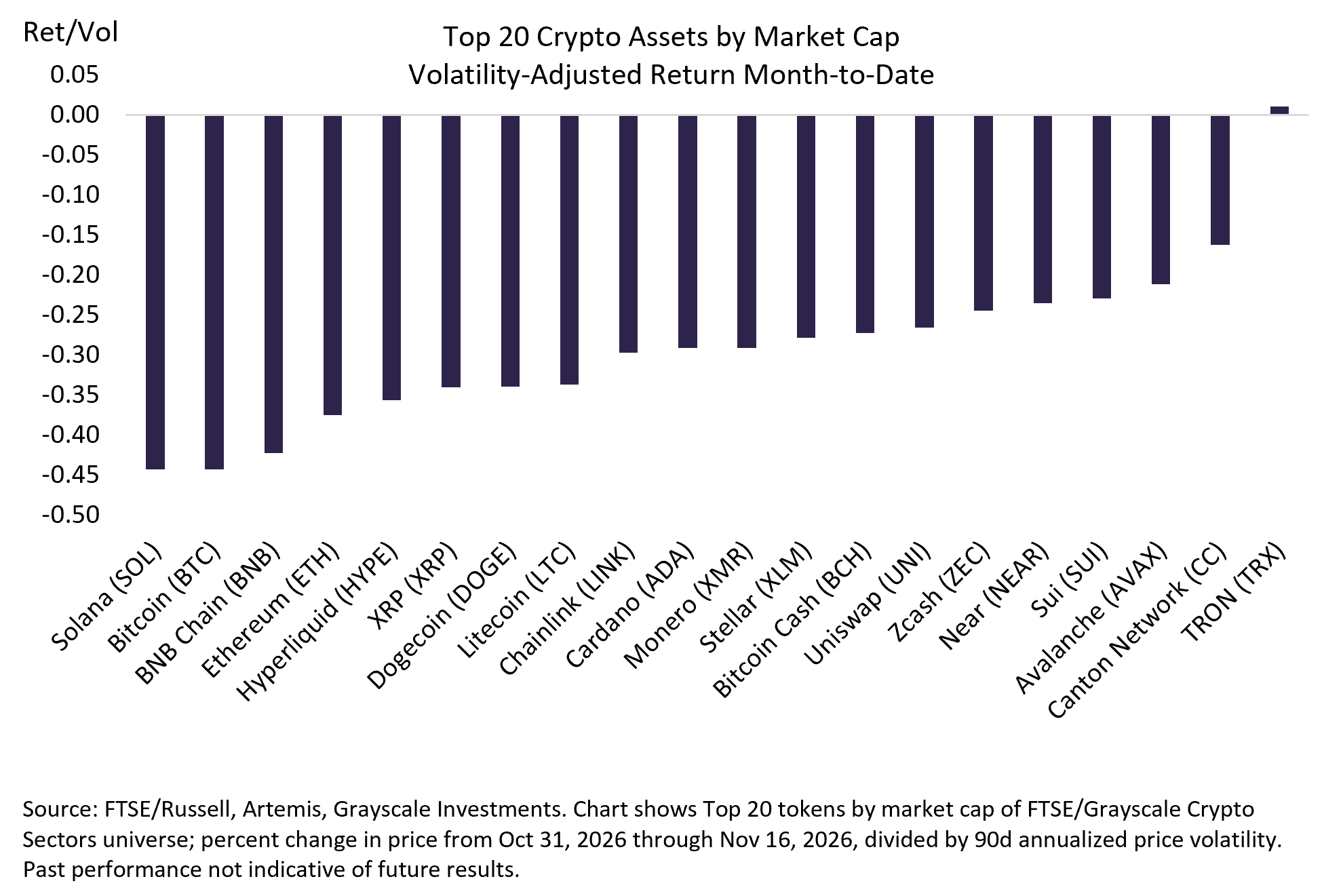
Crypto asset valuations declined sharply in the first two weeks of November. The price of Bitcoin fell about 17% to about $64,000, and our market-cap weighted Crypto Sectors index retreated roughly 18%. The weakness was led by large-cap crypto assets: Bitcoin (BTC) and Solana (SOL) were the worst performing assets among the Top 20 by market cap on a volatility-adjusted basis (Exhibit 1).1
Exhibit 1: Large-cap tokens have underperformed this month
Unlike certain other drawdowns, there did not seem to be one single factor weighing on valuations. Rather, we think the weakness was driven by two main dynamics. First, stablecoin off-ramping into fiat currencies, which may have been related to heightened concerns about the security of funds on exchanges and other platforms. Stablecoin outflows can be a sign of reduced risk taking in crypto markets, which may also have involved selling of Bitcoin and other large-cap crypto assets.
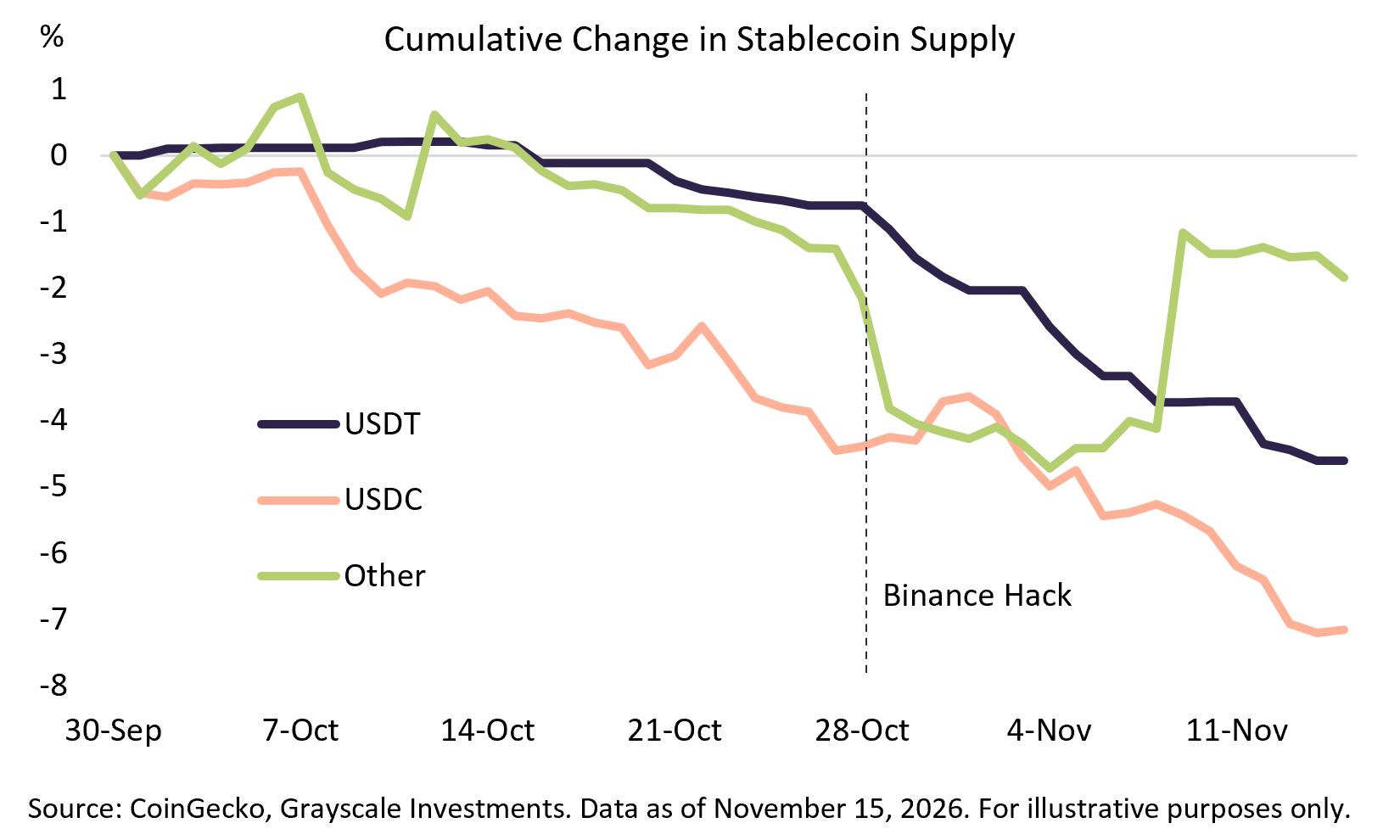
The supply of Circle’s USDC stablecoin started declining in early October, and the price of Tether’s USDT stablecoin began trading below $1 shortly thereafter.2 The supply of USDT and other stablecoins fell at an accelerating rate after the Binance hack on October 29 (Exhibit 2). In our view, stablecoins that are compliant with GENIUS Act regulations, like Circle’s USDC, should be considered low risk. But some investors may be temporarily exiting digital assets for traditional bank-based systems due to high-profile security incidents.
Exhibit 2: Faster decline in stablecoin supply after Binance hack
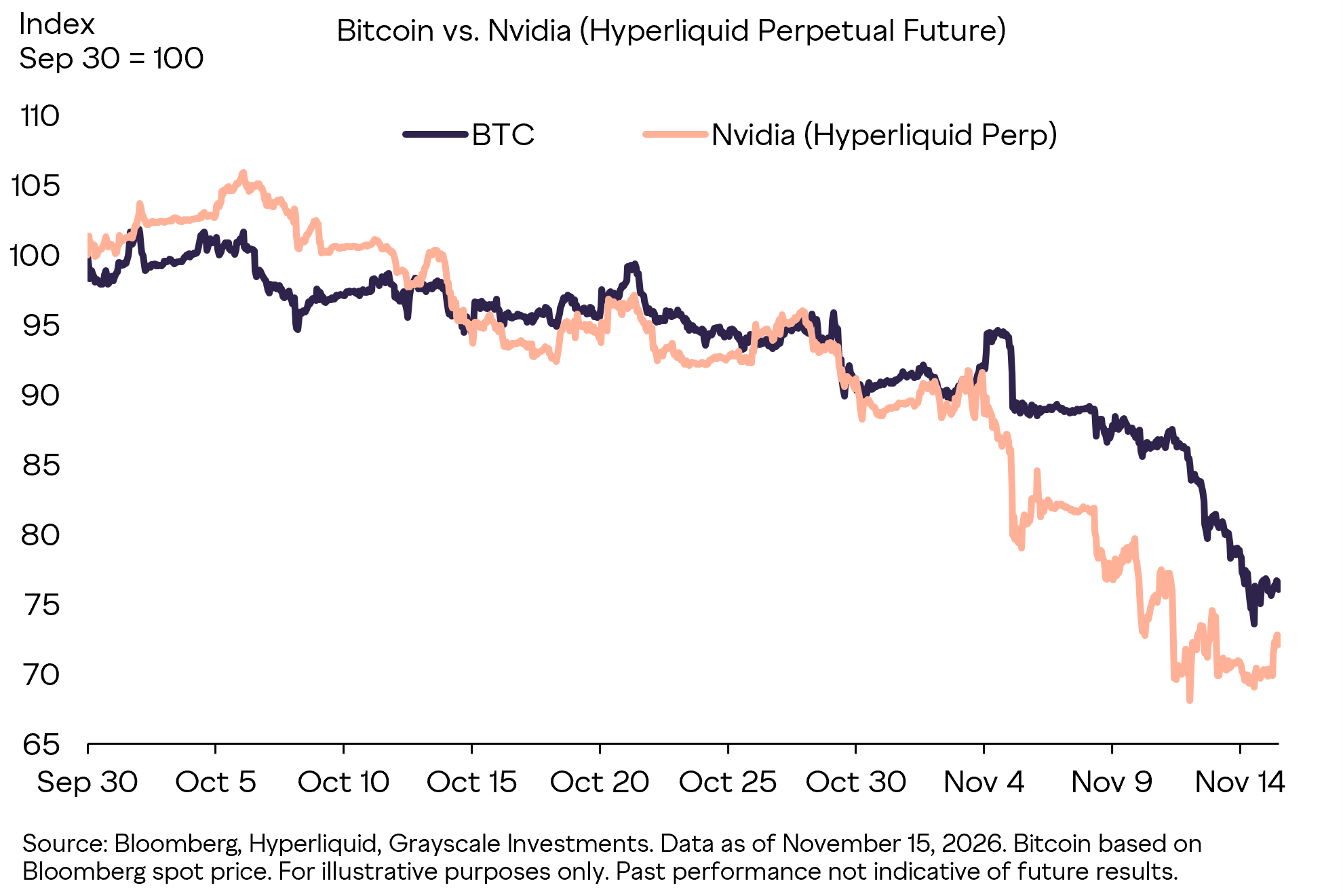
Second, pressure on Nvidia and other AI-related equities may have resulted in derisking of growth portfolios, which often hold digital assets alongside tech stocks (Exhibit 3). AI and blockchains are distinct innovation trends in software technology, but they increasingly intersect. For example, these industries compete for megawatts: many Bitcoin miners also provide compute services for AI models. Therefore, a deterioration in the outlook for AI investment could have implications for Bitcoin infrastructure providers and Bitcoin itself.
Exhibit 3: Spillovers from Nvidia weakness may have weighed on Bitcoin
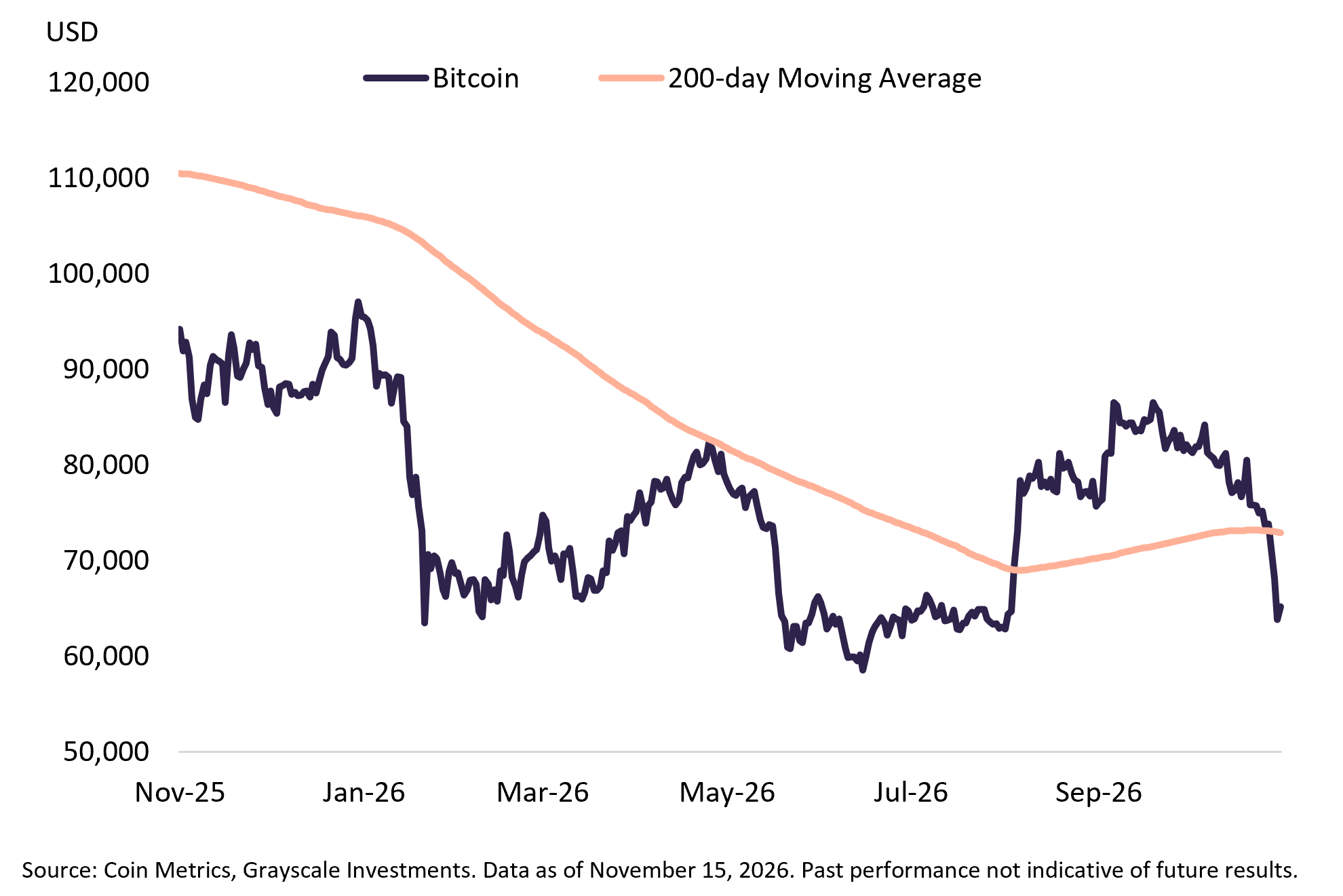
As is often the case, price weakness was compounded by technical factors. On Thursday, November 12, the price of Bitcoin fell below its 200-day moving average, which can be used as a sell signal by trend following funds (Exhibit 4). Falling prices also resulted in liquidations of leveraged positions in perpetual futures. Because much of the selling occurred on the weekend, when order book depth is lower, it may have had an outsized impact on prices.3 Outflows from crypto exchange-traded products (ETPs) may have contributed incrementally to price weakness, but they did not appear extreme.
Exhibit 4: Bitcoin fell below 200d moving average on November 12
Although widely speculated online, we do not think the pullback in crypto markets has much to do with the planned Anthropic IPO—which has been well telegraphed—or pressure on Strategy, the largest digital asset treasury (DAT) company.4 Strategy’s “stretch” (STRC) variable rate preferred product continues to trade near par.
On our proprietary indicators, crypto asset valuations have swung rapidly from overbought to oversold. Admittedly, the macro market backdrop still looks challenging, due to uncertainty around AI investment after the midterms, high inflation and the prospect of more Fed rate hikes, and geopolitical conflict. However, we see many favorable fundamental trends for digital assets, including institutional adoption of stablecoins and tokenized assets, as well as ongoing deficit spending, which creates persistent demand for alternative stores of value. For investors with medium- or long-term holding periods, we believe current valuations represent an attractive entry point.
Key Takeaway: A confluence of factors likely drove crypto valuations lower since the start of November, including stablecoin outflows and spillovers from weakness in AI-related equities. These were exacerbated by a variety of market technicals. Although there are still meaningful macro risks, we think digital asset fundamentals look solid, and current prices represent compelling entry points.