October 5, 2026

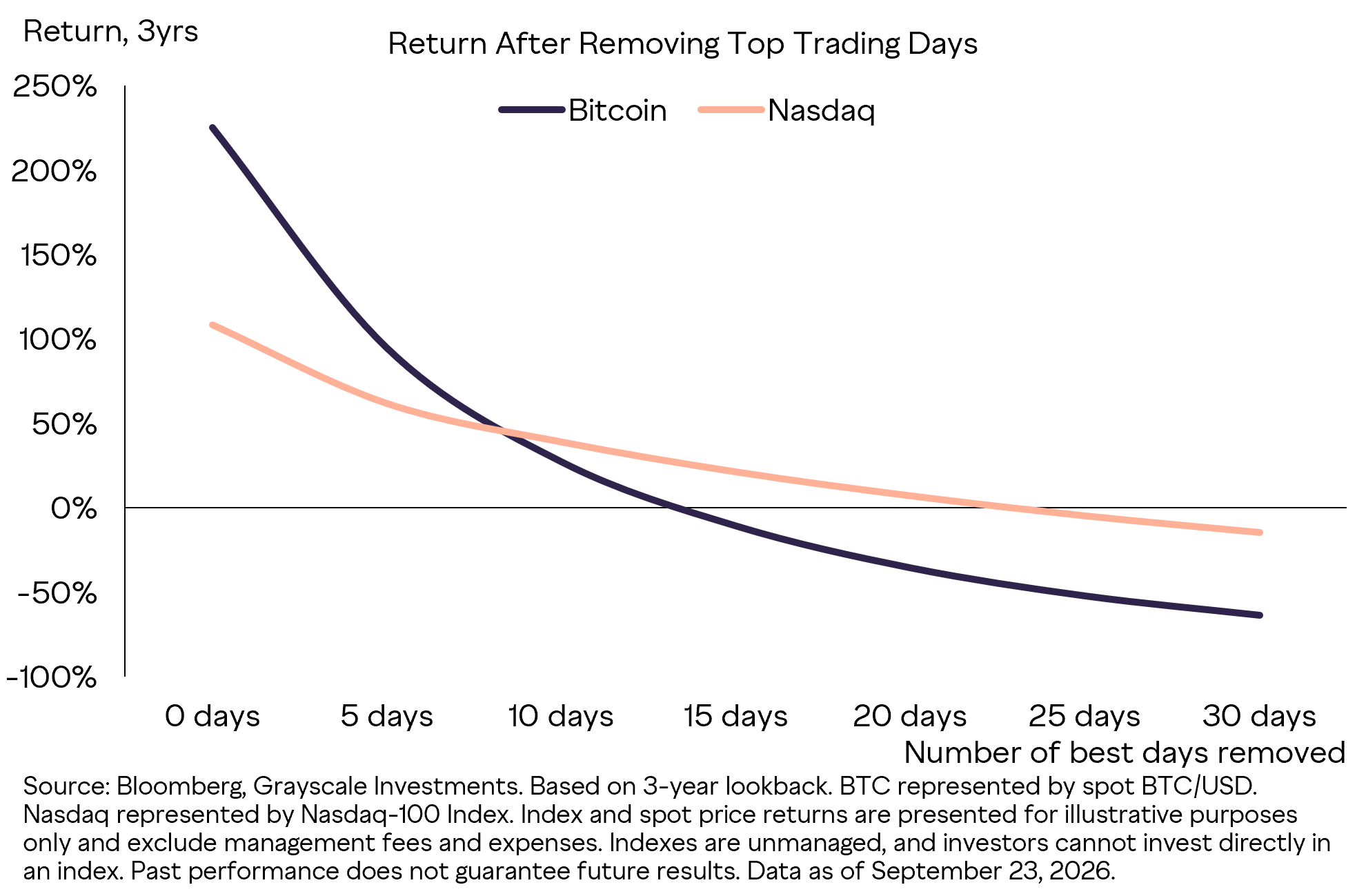
Bitcoin (BTC) returned approximately 225% over the last three years, compared with 109% for the Nasdaq.1 However, Bitcoin’s gains were not distributed evenly across the period. Its strongest trading days contributed disproportionately to the overall result, highlighting a) the difficulty of timing BTC’s exposure; b) the potential cost of being on the “wrong side” of volatility; and c) the price of foregoing potential long-term upside.
Removing BTC’s five best trading days reduces its three-year return from 225% to 95% (Exhibit 1). Without its 10 best days, the return falls to 27%, and removing the top fifteen turns the three-year gain into an 11% loss. Comparatively, Nasdaq returns were less concentrated: removing its fifteen best days reduced its cumulative return from 109% to 21%. Bitcoin’s performance history demonstrates its capacity for powerful upside bursts that can materially reshape long-term investment outcomes.
Risk is typically defined as the possibility of loss, but for an asset with Bitcoin’s return and volatility profile, remaining uninvested carries an opportunity cost of its own, in our view. Fewer than 0.5% of the days in this period accounted for enough upside to cut Bitcoin’s cumulative return by more than half when removed. Investors waiting for volatility to subside or the outlook to become clearer may find that much of the repricing has already occurred. Bitcoin’s best days cannot be reliably predicted—capturing them requires being invested when they arrive.
Key Takeaway: Given BTC’s return and volatility profile, investors looking for long-term capital appreciation can avoid trying to time the market and instead seek consistent, long-term exposure to the asset.
Exhibit 1: Impact of removing top trading days of last three years