May 14, 2026

As US inflation accelerates—due in large part to higher energy costs1—Kevin Warsh, the incoming Chair of the Federal Reserve, will have little choice but to hold rates steady, in our view. The market currently sees no rate cuts until September 2027. Such a higher-for-longer scenario will have many implications for crypto assets. We detail the three we believe are most relevant:
1. Debasement trades face headwinds. Like gold, Bitcoin is a non-interest-bearing currency that competes with the Dollar and other fiat currencies. Higher real interest rates (nominal rate minus inflation) raise the opportunity cost of holding zero-yield alternatives, creating headwinds for ownership. That said, we remain optimistic about the outlook for Bitcoin for a variety of reasons—including CLARITY Act progress—and believe that positive regulatory developments will offset these headwinds.
2. Tokenization of fixed income assets accelerates. Interest rates on dollar-denominated fixed-income securities are generally higher than comparable yields in DeFi2. If crypto-native investors can get higher yields on tokenized bonds, issuers may work to bring even more assets on-chain.
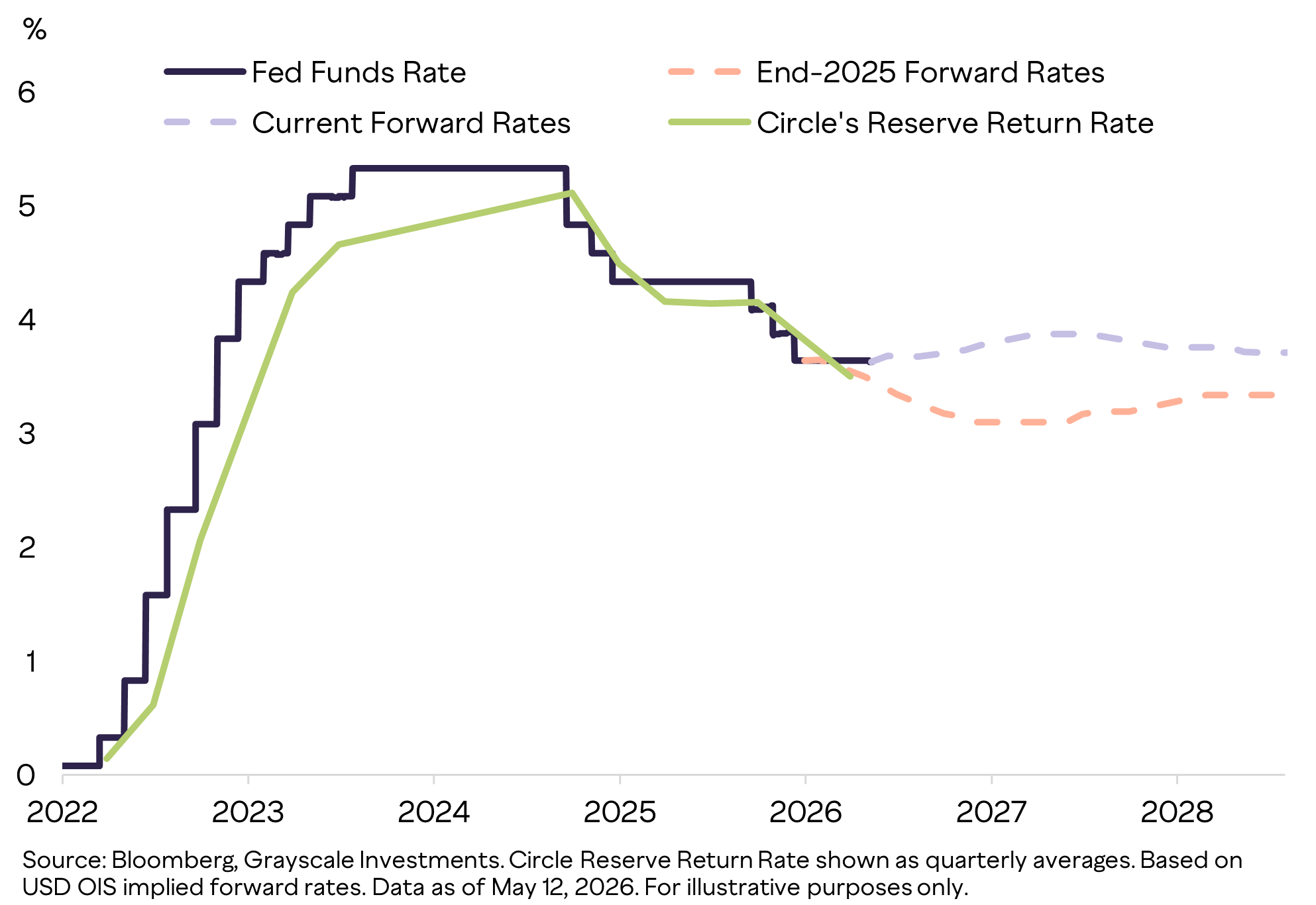
3. Stablecoin issuers see revenue boost. Circle and other stablecoin issuers hold interest-bearing assets but do not (and cannot under the GENIUS Act) pay interest on their digital dollar tokens. Therefore, higher interest rates have translated into higher revenues (see chart below). We estimate that every 25bp increase in short-term rates raises Circle’s revenue by about $190 million3.
Key Takeaway: Key impacts of higher-for-longer Fed policy rates on crypto? Likely headwinds for debasement trades, acceleration of the tokenization of fixed income assets, and higher revenues for stablecoin issuers.
Exhibit 1: Higher rates have translated into higher revenues for stablecoin issuers