
June 26, 2026

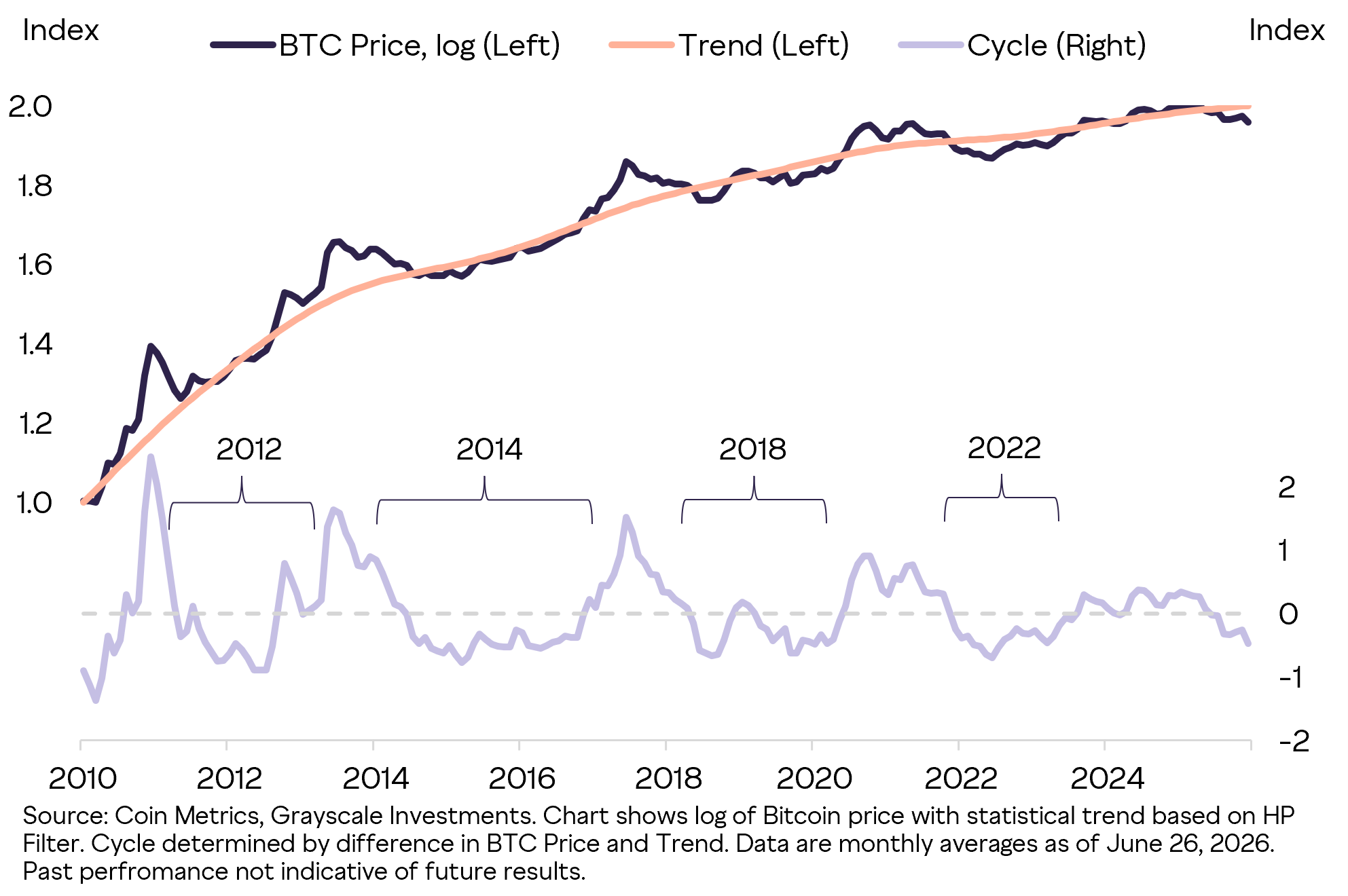
This week the price of Bitcoin slipped below $60,000 and made new lows for the cycle. From its peak of $125,000 in October, Bitcoin is now down more than 50%. In our view, the latest drawdown represents another cyclical pullback around Bitcoin’s rising longer-term trend (Exhibit 1).
Exhibit 1: Bitcoin’s drawdown is another cycle around a rising trend
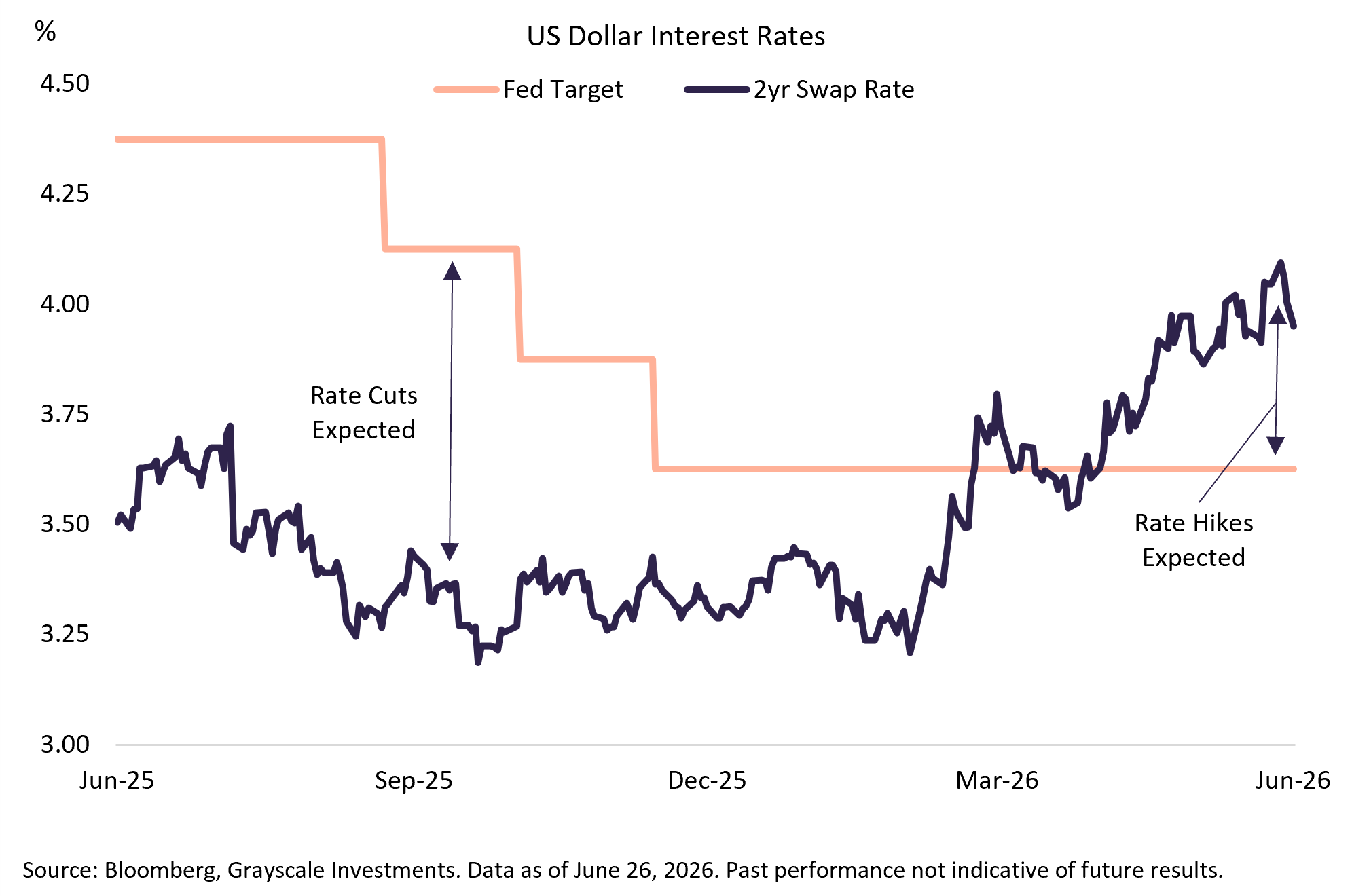
Several factors have weighed on the price of Bitcoin in recent months. Most importantly, a shift in expectations for Fed policy dented the debasement trade. Late last year, prediction markets expected President Trump to nominate the relatively dovish Kevin Hasset for Fed Chair. Instead, he nominated the relatively hawkish Kevin Warsh, who stepped into the role this month. Because of stubborn inflation, the Fed is now expected to hike rates rather than cut rates this year (Exhibit 2). The price of spot gold, which also competes with fiat currencies like the Dollar, is down ~25% from its highs, comparable to the drawdown in Bitcoin after adjusting for volatility.1
Exhibit 2: Warsh Fed is now expected to raise interest rates
In addition to the shift in Fed expectations, crypto markets are struggling with (a) uncertainty around the potentially passage of the CLARITY Act, (b) pressure on Strategy’s levered balance sheet, and (c) investor caution about the digital security risks from quantum computing.
At the same time, the improved regulatory backdrop continues to drive institutional adoption of public blockchain technology—which we see as the most important structural trend for digital asset markets. Just this month, the CFTC approved the first perpetual futures for US markets, and growth in both stablecoins and tokenized assets will support many leading blockchains. In addition, the broader social and political trends underpinning the crypto asset class are still very much in place: unchecked growth in government debt, declining trust in intermediaries, and the rise of AI, which may motivate the need for alternative payment systems and technology that preserves human sovereignty.
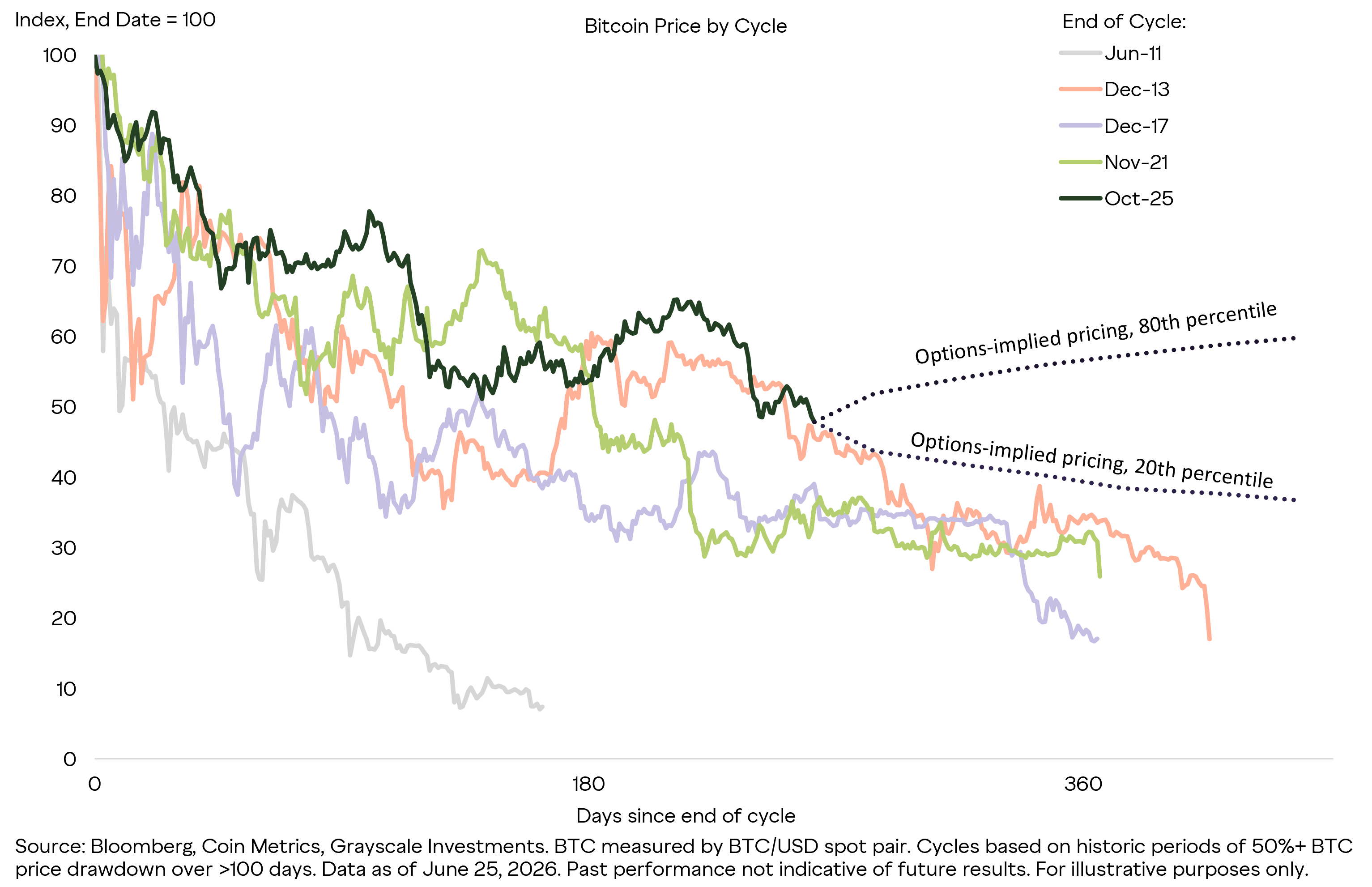
Broadly speaking, we see two ways out of the Bitcoin bear market (Exhibit 3). In our baseline scenario, the CLARITY Act clears the US Senate, Strategy takes steps to shore up its balance sheet, and the Fed holds off on rate hikes. If the incoming news cuts in this favorable direction, Bitcoin’s price may be already close to its low. In a downside scenario, the CLARITY Act does not pass this year, Strategy and other DATs deleverage further, and the Fed is forced to raise rates due to persistent inflation. If downside risks materialize, we could see Bitcoin fall moderately further. Prior cycles have seen Bitcoin’s price fall ~80%, but we do not think the peak-to-trough drawdown this cycle will be as deep this time around, due to the more muted bull market and stickier institutional demand for digital assets.
Exhibit 3: Two scenarios for Bitcoin out of latest bear market
Grayscale Research remains incredibly optimistic about the medium- and long-term outlook for the crypto asset class. It was the best performing asset class over the last ten years2, and we think it will be again over the next ten years. Investors will risk manage their portfolios around short-term catalysts to meet their individual needs. But, in our view, the current bear market offers a compelling opportunity for investors with longer term horizons to position for structural growth in public blockchain technology and digital asset valuations over the coming decade.
Key Takeaway: Whether Bitcoin’s price has reached its cyclical low point depends on upcoming catalysts, including Fed rate decisions and progress on the CLARITY Act in the US Senate. We see many structural positives for the crypto asset class and believe current valuations offer compelling entry points for investors with longer-term horizons.