March 16, 2026

The business of digital payments involves two types of revenue: (i) net interest margin and (ii) transaction processing fees. In the traditional bank-based payment system, commercial banks issue digital money and earn net interest margin. When consumers make transactions, commercial banks, credit card companies, and certain types of fintechs earn transaction processing fees.
Stablecoins on blockchains offer a new mode of digital transactions and compete for the same types of revenue. Stablecoin issuers like Circle and Tether provide digital dollars and earn net interest margin—competing with commercial banks. When users send stablecoins, blockchains like Ethereum and Solana process the transaction and earn the associated fees—competing with banks and credit card companies.
Recent legislation and a range of regulatory changes have opened new pathways for crypto/bank competition. These include last year’s Genius Act, OCC bank charters for crypto intermediaries, and the recent approval by the Federal Reserve Bank of Kansas City for Kraken’s “limited account” (skinny master account).
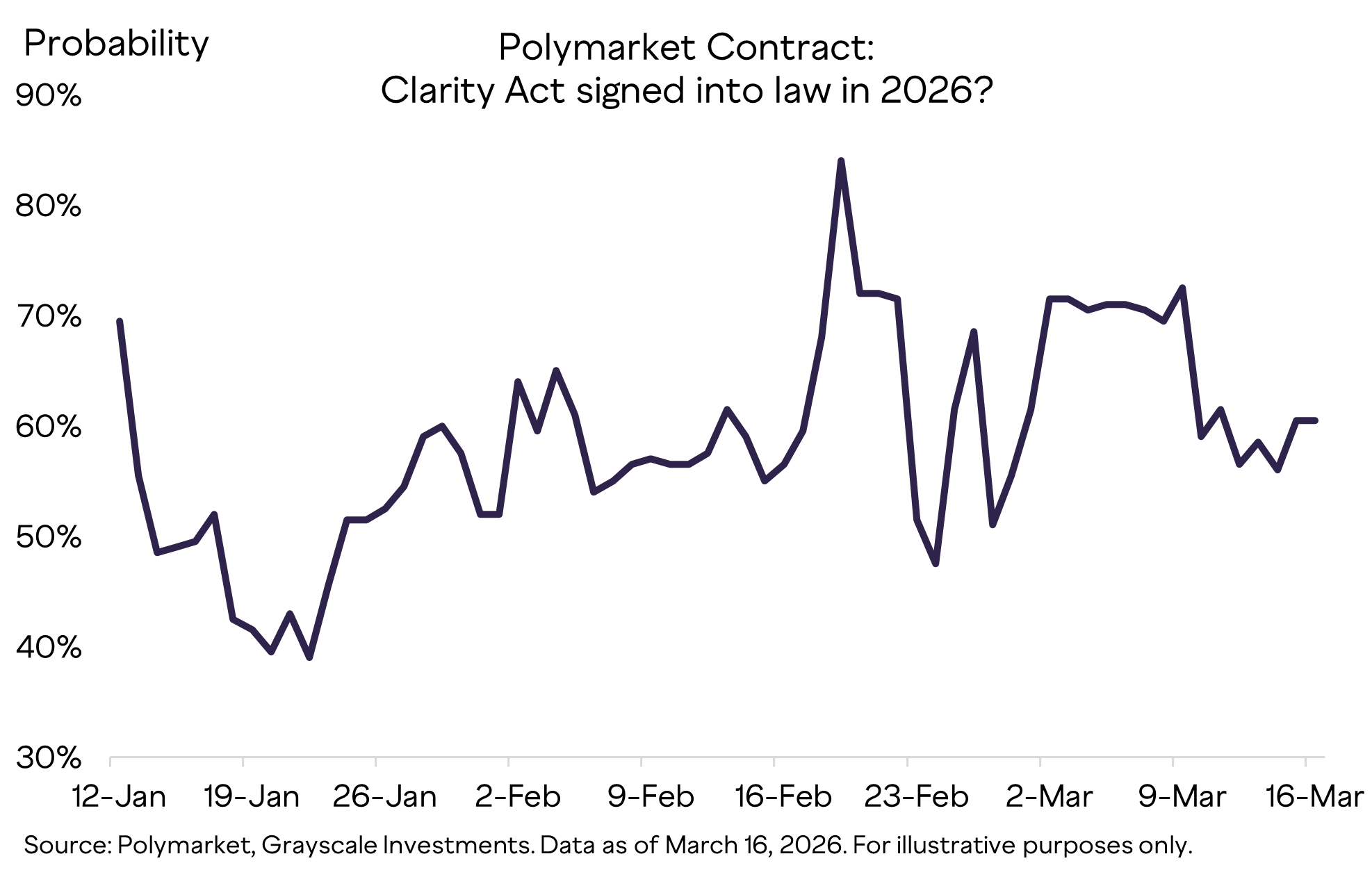
The Senate is now considering the Clarity Act, but the bill may stall over opposition from the banking industry: Polymarket odds are close to 50/50 (see chart). The current battlelines are over stablecoins: Banks do not want stablecoin holders to earn rewards because they believe they would be more competitive with deposits. We can likely expect similar debates between the crypto industry and traditional financial institutions over on-chain lending, decentralized exchanges, and other applications of blockchain-based finance.
Key Takeaway: Blockchains like Ethereum and Solana compete with traditional financial intermediaries. Value accrues to crypto assets as a greater share of global financial activity moves on-chain.